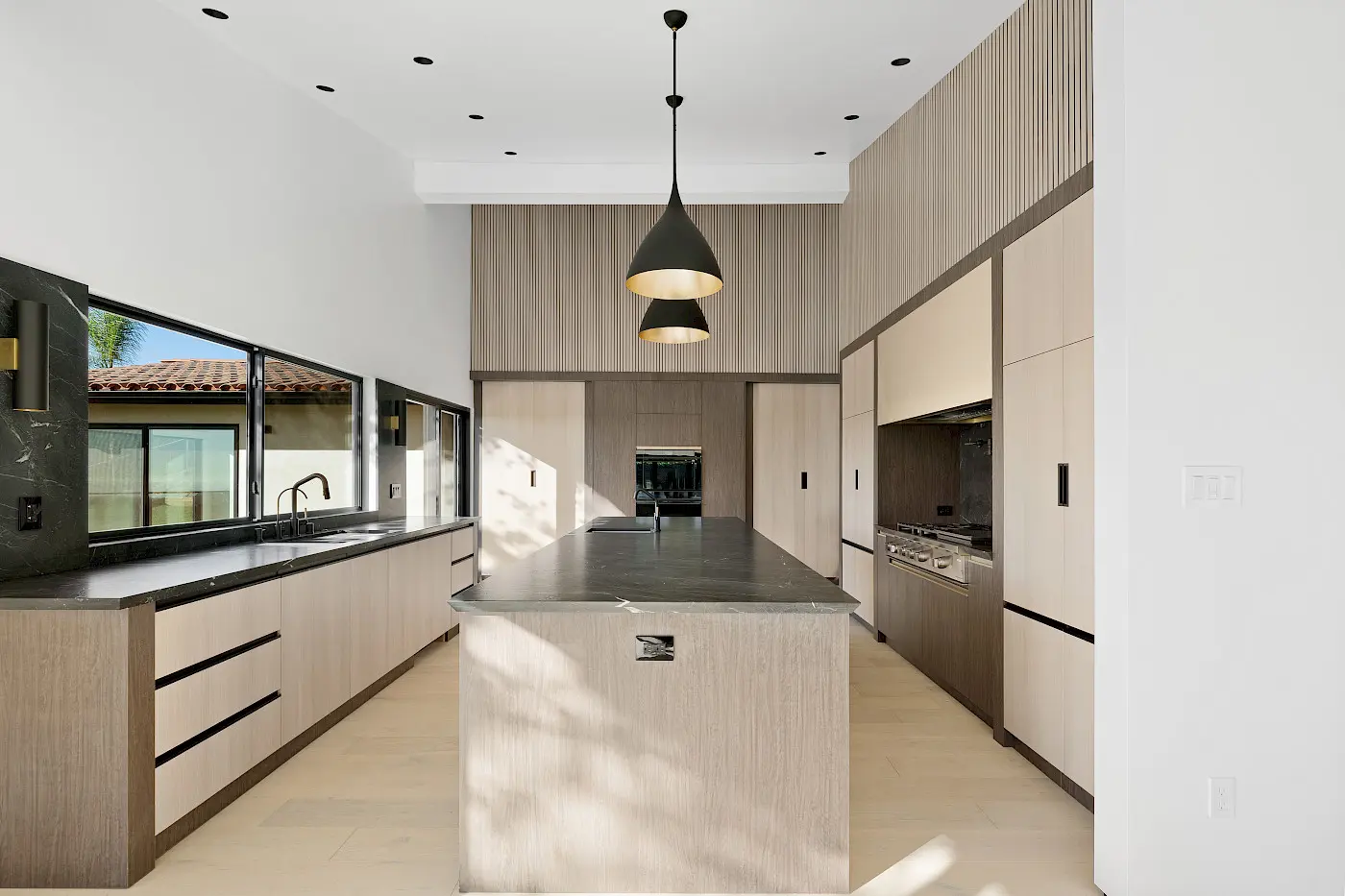
Designing Cabinetry Around Architecture
Design
How custom cabinetry, paneling, and storage become part of the architecture instead of a layer added at the end.
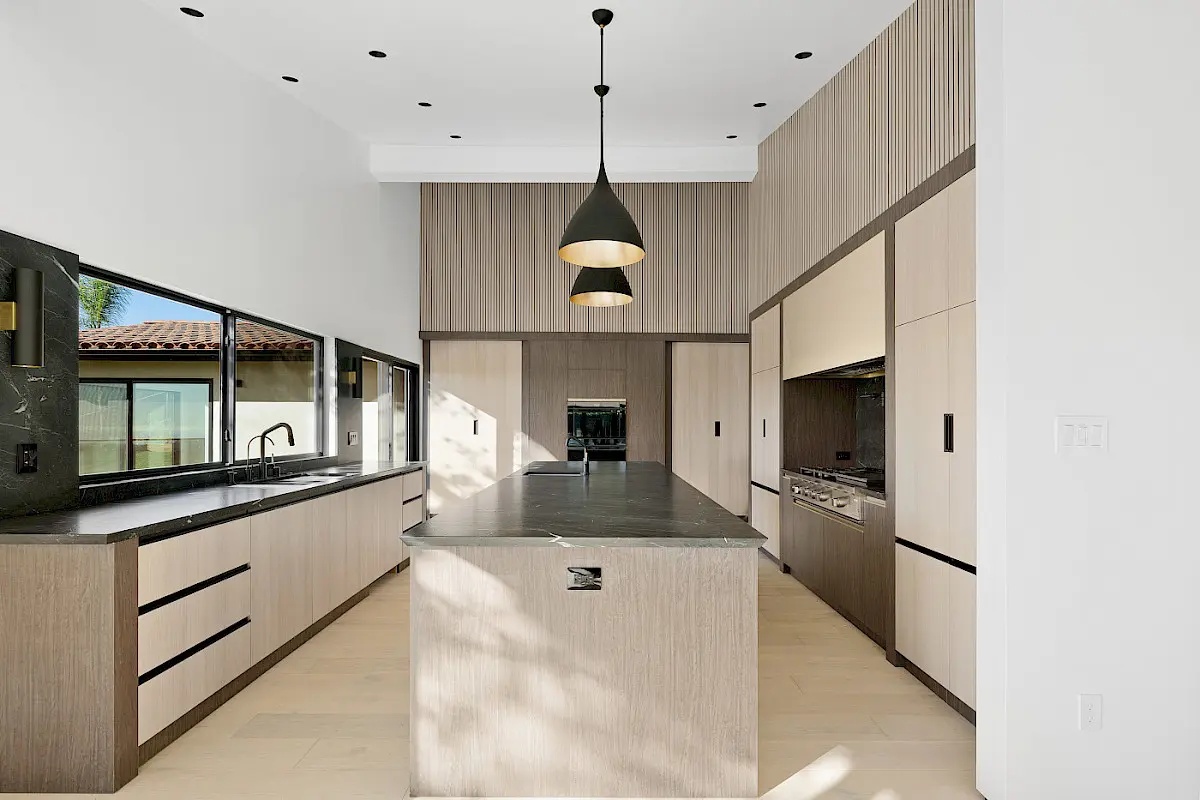
A room feels different when storage is considered as part of the interior rather than an afterthought.
Cabinetry can continue wall planes, define transitions, and accommodate practical requirements without introducing visual noise.
Decisions around alignment, proportions, appliance integration, and circulation influence how naturally these elements sit within the space and how they are experienced over time.
Small details such as reveals, hardware selection, and the relationship between adjacent surfaces often determine whether cabinetry feels intentional or simply occupies the space.
When these considerations are addressed early, storage becomes more than a practical requirement. It contributes to the overall clarity of the room and allows the surrounding materials and architecture to remain uninterrupted.
The space begins to read as a whole rather than as a collection of separate elements.
FAQ